All Categories
Featured
Table of Contents
- – The Single Strategy To Use For 5 - Effective E...
- – Indicators on Advertising & Marketing 2025 - S...
- – The Greatest Guide To Cold Calling Law In Ger...
- – Things about How To Expand Your Us Business I...
- – Cold Calling Vs Warm Calling: What's The Dif...
- – 6 Easy Facts About Germany Outbound Call Reg...
Area III briefly takes a look at the background of the ECHR's Article 10 and the function of civil liberty in Europe. The ECHR's adoption in the shadow of The second world war suggests that its objectives are focused in a historical minute that is really different from one that the mostly U.S.-based social media sites firms are accustomed to.
In Area IV, this Remark establishes whether the Network Enforcement Act indeed breaks civil liberty under Short article 10. Due to the fact that the state has a favorable obligation to not conflict with freedom of speech, and charges are usually considered interferences, Post 10 is linked. Despite the truth that the goals which the legislature is attempting to promote through its disturbance are reasonable, and the truth that the regulation is potentially needed, the absence of oversight and out of proportion fines imply that the ECtHR must find that the legislation breaks Article 10.
The Single Strategy To Use For 5 - Effective Enforcement Of Consumer Law: The Comeback Of Public ...
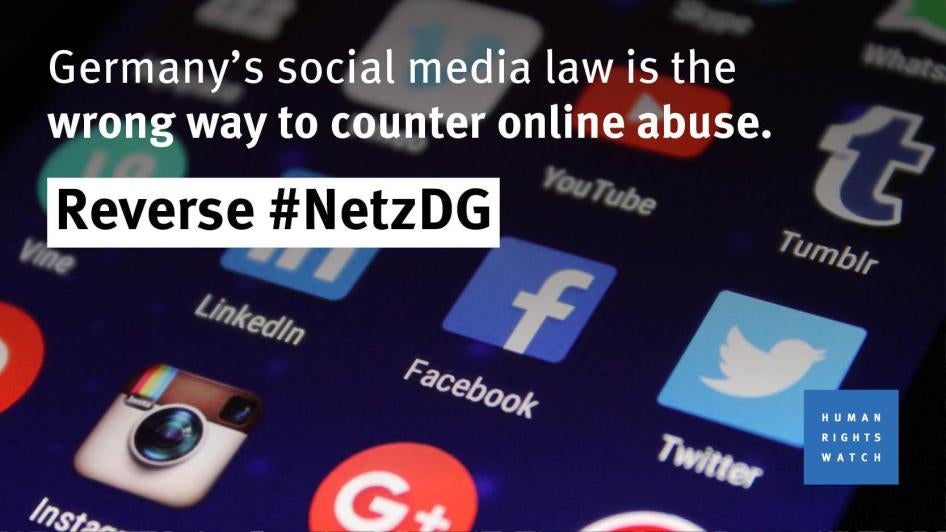
Finding the correct balance in between keeping civil liberty and advertising other legal rights, such as the right to personal privacy or nationwide security, is progressively important and difficult as expression moves far from public, government-sponsored online forums to private areas. In order to comprehend the Network Enforcement Act's communication with free expression legal rights, it is needed to check out the legislation itself, as well as the forces that led to its passage.
With present technology, this suggests that German regulation is superseding global legislation and infringing on various other nations' residents' civil liberties. Hence, although this is a German regulation, the ECtHR should adjudicate it. In order to assess the liberty of expression worries, it is crucial to recognize the context of the Network Enforcement Act.
Below, Germany has frequently asserted an interest in nationwide security, namely blocking terrorist and extremist web content on the net. While the Network Enforcement Act really feels like a law rooted in worries regarding populism and foreign political election tampering, in lots of means the concerns that resulted in the act's flow came to a head in the wake of the 2015 Charlie Hebdo attacks in Paris.

Since the Network Enforcement Act's flow, Russia (an additional ECHR signature), Singapore, and the Philippines have all cited it as a "positive example." The U.K. and France have both recently started to crack down on speech online. The U.K. lately passed the Digital Economy Act, which requires pornographic web sites to develop the technology to proactively block users under the age of eighteen, something personal privacy and cost-free speech experts fret might cause additional censorship.32 French president Emmanuel Macron is pressing for a measure which would certainly give courts emergency powers to get rid of or block content figured out to be "fake" throughout "sensitive election periods." The E.U
Indicators on Advertising & Marketing 2025 - Switzerland - Global Practice Guides You Should Know
The law then outlines these business' reporting obligations. Firms which receive more than a hundred grievances per fiscal year concerning unlawful material are mandated to produce semiannual reports on how they handled claimed illegal material. Since July 2018, this number consisted of Twitter (roughly 270,000 issues); YouTube (58,297 grievances);40 Google+ (2,769 complaints); (1,257 complaints);42 and Facebook (886 grievances).
If the choice depends upon the falsity of an accurate accusation or other accurate conditions, the network may give a user an opportunity to respond. This is not required, and the law includes no obligatory option for people whose material is removed at the first "manifestly illegal" phase. Nevertheless, as is discussed throughout this Remark, affected people may attract the courts.
The Greatest Guide To Cold Calling Law In Germany - Umu
There is the problem of what "remove" really means and the exportation of censorship to various other nations. Politicians from Germany's reactionary event, Choice for Deutschland (AfD), are amongst the legislation's staunchest challengers.
The Left Celebration and the pro-business Free Democratic Celebration also have their own issues regarding the regulation. Germany has a hard background with censorship that the Network Enforcement Act can not help but echo.
Things about How To Expand Your Us Business Into Dach: 9 Best ...
While the Network Enforcement Act is not a prior restraint similarly a certificate is, the similarities are difficult to overlook. The Network Enforcement Act is an additional law in a long line of attempts to censor material by proxy. Seth Kreimer highlights several examples of proxy censorship with the net committed by France, Switzerland, Germany, and Britain.
Instead of permitting the speech to propagate and possibly cause damage while waiting on the courts to settle it, the Bundestag has actually chosen to shift the price of court adjudication to its citizens and tech companies. Currently, without the advice that years of judicial experience would supply, technology business are sent to sea to identify what web content is manifestly unlawful, and people whose speech is gotten rid of pay of their silence alone "with none of the due procedure guarantees that maintain precision in the general public market."68 In addition, due to the fact that the fines for noncompliance are so high, personal stars have a much higher reward to shield themselves from sanctions, rather than maintaining the free expression rights of their customers.
Cold Calling Vs Warm Calling: What's The Difference? The ... Things To Know Before You Get This
Rate is amongst the key factors the law is thought about required. As soon as material is positioned on the web, it spreads like wildfire and comes to be challenging to eliminate.
Contesting removal of a message can take weeks,70 and for the average customer it may not be worth doing. Lastly, the absence of interpretation for "elimination" brings the legislation into a global context. What the German Bundestag likely desired was that a blog post would certainly be removed for German customers.
Obviously, Facebook could just pay the fine and reject to remove the contentFacebook's earnings for 2018 was 55.8 billion bucks, a figure which even the maximum penalty would not scratch. The absence of quality in the regulation concerning what it suggests to remove a blog post could lead to various other courts following Hamburg's example.
6 Easy Facts About Germany Outbound Call Regulations 2025 - Talk-q Explained

CNIL argued that they were just requesting for what the E.U. had actually already granted. Google's lawyers, supported by lawful guidance from various other tech companies, pushed back. Not only would the system be "untenable," however it would possibly affect accessibility to information and civil liberty in nations around the world.80 The Network Enforcement Act could result in even bigger disputes.
For social media business, this impact is usually exerted without using lawful networks. The code of conduct to neutralize hate speech mentioned previously is not binding law. Hence, while appearing to be all stick and no carrot, the Network Enforcement Act at the very least has the advantage of being justiciable in open court.

Table of Contents
- – The Single Strategy To Use For 5 - Effective E...
- – Indicators on Advertising & Marketing 2025 - S...
- – The Greatest Guide To Cold Calling Law In Ger...
- – Things about How To Expand Your Us Business I...
- – Cold Calling Vs Warm Calling: What's The Dif...
- – 6 Easy Facts About Germany Outbound Call Reg...
Latest Posts
8 Simple Techniques For Luxembourg, France, Germany, Slovenia, Portugal, Belgium, Czech ...
The Definitive Guide to Why Germany Must Engage With China – Foreign And Security Policy
More
Latest Posts
8 Simple Techniques For Luxembourg, France, Germany, Slovenia, Portugal, Belgium, Czech ...
The Definitive Guide to Why Germany Must Engage With China – Foreign And Security Policy